· 4 min read
The Best AI Tools for Church Donor Stewardship and Major Gift Identification in 2026
A curated comparison of the best AI tools for church donor stewardship and major gift identification in 2026—who each one fits, where each one falls short, and how to choose if you only have budget for one.
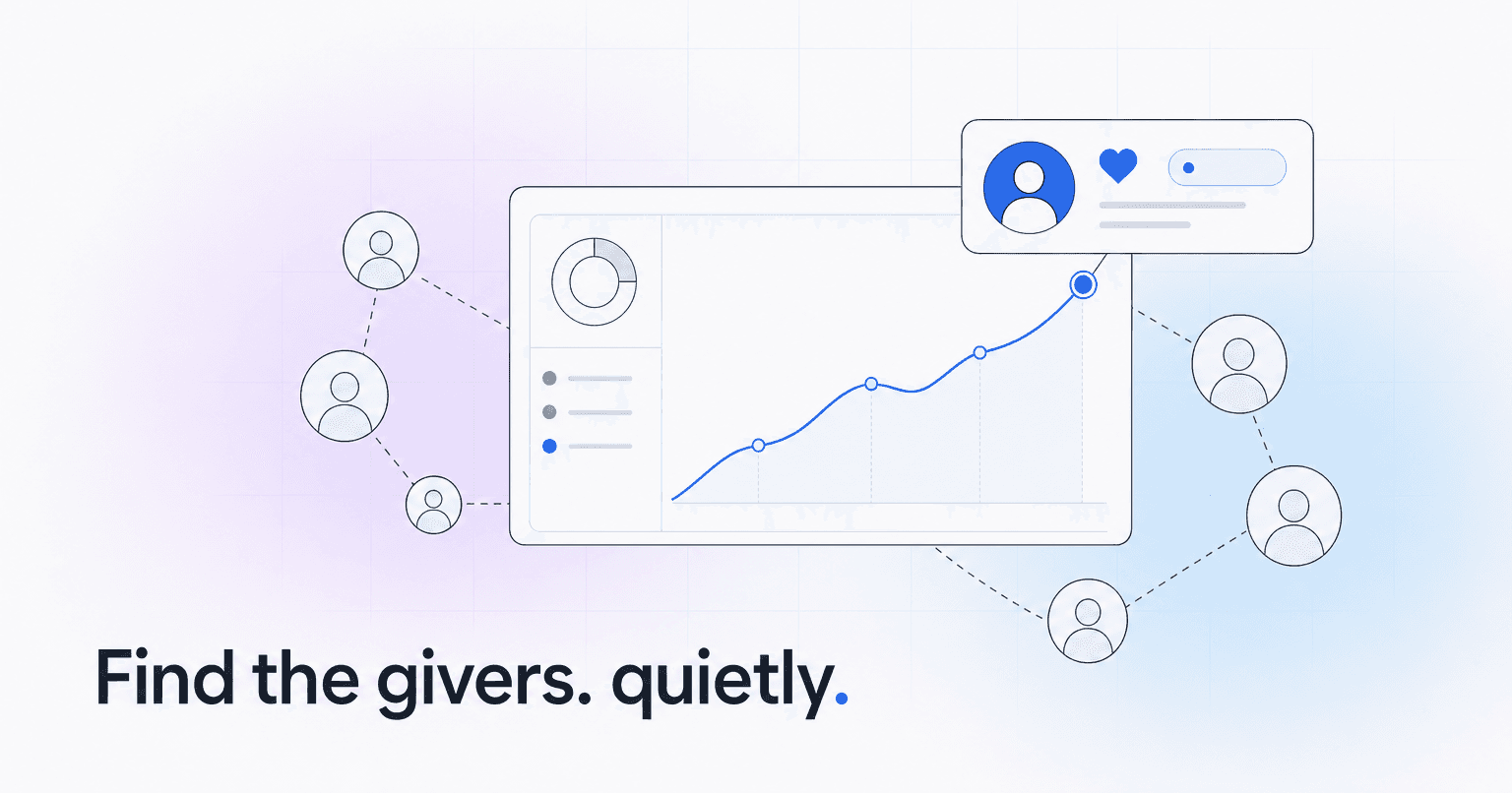
The best AI tools for church donor stewardship in 2026 are the ones that do two things well: spot giving pattern shifts before they become lapses, and surface the quiet members who are already positioned to become major givers. Below is a curated list of the tools worth evaluating this year, who each one fits, and where each one falls short. If you only have budget for one, the verdict at the end of each section will help you decide.
ChurchAI
What it is: A unified church engagement and financial platform built by pastors, designed to sit on top of your existing ChMS (Planning Center, Breeze, CCB) and replace the patchwork of AI, communication, and financial reporting tools most churches stitch together. On the stewardship side, it flags givers whose patterns are shifting (frequency dropping, amount trending down, gaps opening) and surfaces members whose engagement signals suggest untapped major gift capacity, before your finance director would notice on a quarterly report.
Who it is for: Churches from 300 to 5,000 that already have a ChMS but do not have a full-time development officer combing through giving data every week. Finance directors who want the donor pipeline built for them, not queried by hand.
Where it shines: It does not just identify at-risk donors, it automates the follow-up. A soft nudge from a pastor, timed correctly, is worth far more than a generic annual appeal, and the platform handles the timing. It also generates the financial reporting your board wants without a staff member spending Friday afternoons in spreadsheets.
Verdict: The strongest option if you want prediction plus action in one place. Book a walkthrough at churchai.com if major gift pipeline is the gap you are trying to close.
Virtuous CRM with Responsive AI
What it is: A nonprofit CRM with a "responsive fundraising" model that scores donors on engagement and giving signals to suggest next actions.
Who it is for: Larger churches that already operate more like a nonprofit development shop, with a dedicated fundraising staff who will actually work the queues Virtuous generates.
Where it shines: Deep donor journey automation and strong reporting for capital campaigns.
Verdict: Excellent if you have the staff to feed it. Overkill if your finance team is one person plus a bookkeeper.
DonorSearch
What it is: A wealth screening service that appends external data (real estate holdings, public giving history, business affiliations) to your donor records so you can prioritize outreach.
Who it is for: Churches launching a building campaign or a named endowment push, where knowing capacity matters as much as knowing affinity.
Where it shines: External capacity data that your internal giving history cannot tell you.
Verdict: Pair it with an engagement platform. On its own it tells you who could give, not who is ready to give.
Overflow
What it is: A giving platform focused on non-cash assets: stock, crypto, DAF grants. Some AI is layered on for donor prompts.
Who it is for: Churches with a base of business owners and professionals who give more efficiently through appreciated assets.
Verdict: A giving rail, not a stewardship brain. Best used alongside a platform that decides who to prompt and when.
Generic ChatGPT or Claude workflows
What it is: DIY prompting against exported giving data.
Who it is for: Very small churches with a tech-savvy volunteer and no budget.
Verdict: Useful for one-off analysis. Not a system. Compliance is on you, and the data leaves your controlled environment every time you paste it, so review the privacy implications carefully before going this route.
How to choose
If your problem is capacity data, use DonorSearch. If your problem is that you have staff but no system, use Virtuous. If your problem is that you have data but no staff time to act on it, and you want disengagement prediction and major gift identification running quietly in the background, that is the specific gap ChurchAI was built to fill.
Stewardship in 2026 is not about sending more appeals. It is about sending the right note, from the right pastor, to the right person, in the week that actually matters. The tools above, chosen well, make that possible without adding a full-time role to your budget. Questions on fit? Our team is happy to help through ChurchAI support.
Common questions
- What is ChurchAI?
- ChurchAI is an AI-native church management platform built to help churches retain members, grow giving, and eliminate administrative busywork. Unlike legacy church software that stores data passively, ChurchAI acts as an intelligence layer that connects to your existing tools, analyzes engagement patterns, predicts churn, identifies emerging donors and volunteer leaders, and automates follow-up workflows.
- How is ChurchAI different from Planning Center or other church management software?
- Most church management software like Planning Center, Rock CHMS, or Subsplash are built for administration and reporting. They store data but don't act on it. ChurchAI is built for discipleship and growth. It uses AI to proactively surface insights, predict which members are at risk of leaving, identify first-time and emerging givers, recommend volunteer candidates, and trigger automated follow-up communications. ChurchAI integrates with your existing tools and serves as the command center that turns church data into action.
- Does ChurchAI replace my current church software?
- No. ChurchAI connects directly with your existing church tools including Planning Center, Rock CHMS, Subsplash, Mailchimp, Microsoft Fabric, Power BI, and others. It acts as the intelligence layer on top of your current tech stack, unifying data from scattered systems into one command center without requiring you to switch platforms.
- What problems does ChurchAI solve for churches?
- ChurchAI solves three core problems: (1) Member churn — it identifies disengaged members early through attendance and engagement pattern analysis, then triggers automated follow-up before people fall through the cracks. (2) Missed growth opportunities — it surfaces emerging donors, first-time givers, and potential volunteer leaders that pastors would otherwise miss. (3) Administrative overload — it automates follow-ups, people management, growth tracks, and reporting so church staff can focus on ministry instead of spreadsheets.
- What size churches does ChurchAI work for?
- ChurchAI works for churches of all sizes, from growing congregations to enterprise-level megachurches with multiple campuses and complex tech stacks. The platform scales to handle multi-campus operations with thousands of members, multiple data systems, and sophisticated reporting needs.
- Is ChurchAI an AI chatbot for churches?
- No. ChurchAI is not a chatbot or a simple Q&A tool. It is a full AI-native platform with intelligent agents that analyze church data, score member engagement, predict behavior patterns, automate workflows, and deliver actionable insights. Think of it as an AI-powered Executive Pastor that monitors church health 24/7 and proactively surfaces what needs attention.
- What AI technology does ChurchAI use?
- ChurchAI uses AI-native architecture including large language models, engagement scoring models, predictive analytics for churn and giving patterns, and automated workflow agents. The platform's domain expertise is encoded directly into its AI workflows, prompts, and scoring models, built by founders with over a decade of church leadership experience. This creates a data flywheel where the more churches use ChurchAI, the smarter its predictions and recommendations become.
- How do I get started with ChurchAI?
- Visit churchai.com to request a demo. The ChurchAI team will walk you through the platform, understand your current tech stack and church needs, and show how ChurchAI integrates with your existing tools to deliver immediate value.