· 4 min read
ChurchAI vs Tithe.ly: Which Platform Does More Than Just Give Your Church an App and Online Giving?
Short answer: Tithe.ly is a giving-first toolkit. ChurchAI is an engagement and retention platform that predicts who is about to disengage, automates follow-up, surfaces new donors and volunteer leaders, and generates financial reports and content, on top of the ChMS you already use.
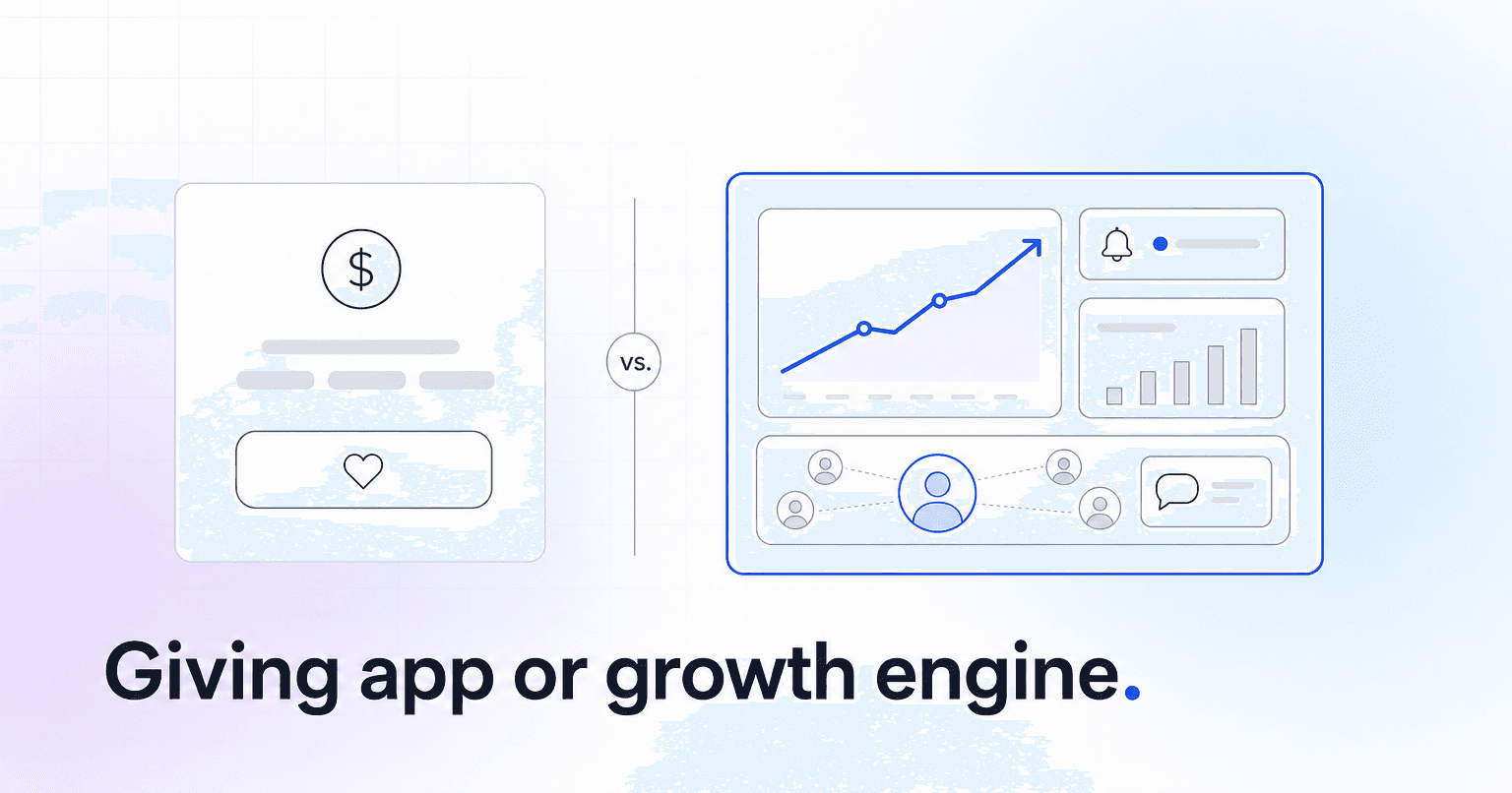
Short answer: Tithe.ly is a giving-first toolkit (donations, a church app, basic messaging, a website builder). ChurchAI is an engagement and retention platform that predicts who is about to disengage, automates follow-up, surfaces new donors and volunteer leaders, and generates financial reports and content, on top of the ChMS you already use. If your problem is "we need a giving button and a mobile app," Tithe.ly covers that. If your problem is "people are quietly slipping away and our staff can't keep up," those are different tools for different jobs.
Here is how they compare where it actually matters.
What each platform is built to do
- Tithe.ly: Started as online giving and has expanded outward into an app, a website builder, ChMS features, and text/email messaging. The center of gravity is still the donation flow. You buy Tithe.ly when you want a modern way to collect money and put a church-branded app in members' pockets.
- ChurchAI: Built by pastors who lost people they shouldn't have. It sits on top of Planning Center, Breeze, or CCB and watches the patterns your staff can't. It flags disengagement early, drafts the follow-up, spots who is ready to give or lead, and consolidates the AI, communication, and financial reporting tools most churches are already paying for separately.
Giving and donor management
Tithe.ly does giving well. Recurring gifts, text-to-give, kiosk, and reporting on donations are all in the box, and processing fees are competitive.
ChurchAI takes a different angle on donors. Rather than replace your processor, it looks at giving behavior across the congregation and tells you which regular givers are pulling back before the trend shows up in a monthly report, and which attendees look statistically likely to become first-time givers based on engagement patterns. That is the difference between collecting gifts and growing generosity.
If your only complaint is "we need a better giving page," Tithe.ly is enough. If you are watching giving soften and cannot tell why, ChurchAI is answering a question Tithe.ly does not try to answer.
Member retention and disengagement
This is where the platforms diverge most.
- Tithe.ly: Push notifications, group messaging, and attendance tracking if you use their ChMS. You have to notice the drop yourself and decide what to do about it.
- ChurchAI: Predicts disengagement before someone stops showing up. When a long-time member starts going quiet, or a first-time visitor does not return by week three, the platform flags it and can trigger the follow-up automatically. A full room on Sunday is not the same as a healthy church, and the numbers rarely tell you what the patterns already show.
If your Sunday attendance looks steady but back-door losses are the real worry, this is the whole ballgame.
Communication and content
Tithe.ly handles the mechanics: send a text, send an email, post to the app. You write the message.
ChurchAI writes the message. Sermon summaries, follow-up notes for a first-time guest, a stewardship email to lapsed givers, a volunteer recruitment blurb: all drafted in the platform, in your voice, then sent through the same channels. It replaces the ChatGPT tab, the Mailchimp account, and the Clearstream login with one place.
Reporting
Tithe.ly reports on giving. ChurchAI reports on giving, engagement, volunteer health, and staff productivity in one dashboard, and turns the numbers into plain-English observations a pastor can act on Monday morning.
Integration and stack simplification
Tithe.ly wants to be your ChMS, your app, and your giving processor. That is fine if you are starting from scratch. It is disruptive if you already run Planning Center or Breeze.
ChurchAI is explicit that it does not replace your ChMS. It plugs into Planning Center, Breeze, or CCB and replaces the ancillary tools instead: the AI writer, the mass texting service, the reporting spreadsheet, the disparate donor analytics.
Pick Tithe.ly if...
You are a smaller church whose primary need is online giving and a branded mobile app, you do not already have a ChMS you love, and your team has capacity to run follow-up manually.
Pick ChurchAI if...
You already have a ChMS, you can feel people slipping through the cracks faster than staff can chase them, and you want one platform to handle the AI, communication, and reporting work instead of six subscriptions. Start with a demo or reach out through support with the specifics of your current stack.
The right answer depends on the problem you are actually trying to solve. Giving tools collect money. Engagement platforms keep the people who give.
Common questions
- What is ChurchAI?
- ChurchAI is an AI-native church management platform built to help churches retain members, grow giving, and eliminate administrative busywork. Unlike legacy church software that stores data passively, ChurchAI acts as an intelligence layer that connects to your existing tools, analyzes engagement patterns, predicts churn, identifies emerging donors and volunteer leaders, and automates follow-up workflows.
- How is ChurchAI different from Planning Center or other church management software?
- Most church management software like Planning Center, Rock CHMS, or Subsplash are built for administration and reporting. They store data but don't act on it. ChurchAI is built for discipleship and growth. It uses AI to proactively surface insights, predict which members are at risk of leaving, identify first-time and emerging givers, recommend volunteer candidates, and trigger automated follow-up communications. ChurchAI integrates with your existing tools and serves as the command center that turns church data into action.
- Does ChurchAI replace my current church software?
- No. ChurchAI connects directly with your existing church tools including Planning Center, Rock CHMS, Subsplash, Mailchimp, Microsoft Fabric, Power BI, and others. It acts as the intelligence layer on top of your current tech stack, unifying data from scattered systems into one command center without requiring you to switch platforms.
- What problems does ChurchAI solve for churches?
- ChurchAI solves three core problems: (1) Member churn — it identifies disengaged members early through attendance and engagement pattern analysis, then triggers automated follow-up before people fall through the cracks. (2) Missed growth opportunities — it surfaces emerging donors, first-time givers, and potential volunteer leaders that pastors would otherwise miss. (3) Administrative overload — it automates follow-ups, people management, growth tracks, and reporting so church staff can focus on ministry instead of spreadsheets.
- What size churches does ChurchAI work for?
- ChurchAI works for churches of all sizes, from growing congregations to enterprise-level megachurches with multiple campuses and complex tech stacks. The platform scales to handle multi-campus operations with thousands of members, multiple data systems, and sophisticated reporting needs.
- Is ChurchAI an AI chatbot for churches?
- No. ChurchAI is not a chatbot or a simple Q&A tool. It is a full AI-native platform with intelligent agents that analyze church data, score member engagement, predict behavior patterns, automate workflows, and deliver actionable insights. Think of it as an AI-powered Executive Pastor that monitors church health 24/7 and proactively surfaces what needs attention.
- What AI technology does ChurchAI use?
- ChurchAI uses AI-native architecture including large language models, engagement scoring models, predictive analytics for churn and giving patterns, and automated workflow agents. The platform's domain expertise is encoded directly into its AI workflows, prompts, and scoring models, built by founders with over a decade of church leadership experience. This creates a data flywheel where the more churches use ChurchAI, the smarter its predictions and recommendations become.
- How do I get started with ChurchAI?
- Visit churchai.com to request a demo. The ChurchAI team will walk you through the platform, understand your current tech stack and church needs, and show how ChurchAI integrates with your existing tools to deliver immediate value.